


Neurodiversity Training for in-school educators: What Effective Training Should Include

AISee Collaborative • July 29, 2026

Share this article

Quick Answer

Neurodiversity training for teachers works best when it is practical, reflective, and rooted in everyday classroom decisions. Effective training helps staff understand neurodivergent experiences, make reasonable adjustments, respond to distress without punishment, and work in partnership with families, rather than treating neurodiversity as a one-off awareness topic.

Neurodiversity training for those in education should do more than raise awareness. It should help educators make better everyday decisions about communication, classroom routines, behaviour, access, and belonging. When training is practical and neuroaffirming, staff are more confident about supporting students without relying on assumptions or stereotypes. That matters because inclusive teaching is built in small moments: how instructions are given, how transitions are handled, and how needs are recognised early. AISee Collaborative takes that approach through active learning and education support, with training that is reflective, rights-based, and designed for real school settings. In this article, we explain what good neurodiversity training for teachers should include, why one-off awareness sessions often fall short, and what schools should expect if they want meaningful change. For a practical starting point, schools can also review our guide to supporting neurodiverse students alongside staff development planning.

What is neurodiversity training for educators?

Neurodiversity training for educators is professional learning that helps staff understand and support different neurodevelopmental profiles in the classroom. It should cover autism, ADHD, dyslexia, dyspraxia, Tourette syndrome, and related differences in a way that is practical, respectful, and useful in daily teaching. This is becoming increasingly relevant as school additonal support needs requirements are becoming close to 50% of pupil/student population.

Good neurodiversity training for educators is not about turning staff into diagnosticians. It is about helping them notice patterns, reduce barriers, and respond more thoughtfully. That means looking at access, sensory needs, executive functioning, communication differences, and the impact of school systems on learning and wellbeing.

The best training also connects theory to action. Educators should leave with a clearer sense of how to adjust instructions, reduce overload, support transitions, and understand behaviour as communication. That is why AISee Collaborative focuses on outcomes-led solution development rather than generic awareness sessions. Schools often benefit when training is paired with consultation, because staff can apply ideas to their own context.

For broader background, schools may also find it useful to compare different learning formats, such as the Supporting Neurodiversity in the Classroom course overview or the Training page from another provider. However, the real question is not whether training exists. It is whether the training changes practice.

In short, neurodiversity training for teachers should help school staff create conditions where more students can participate, understand, and succeed.

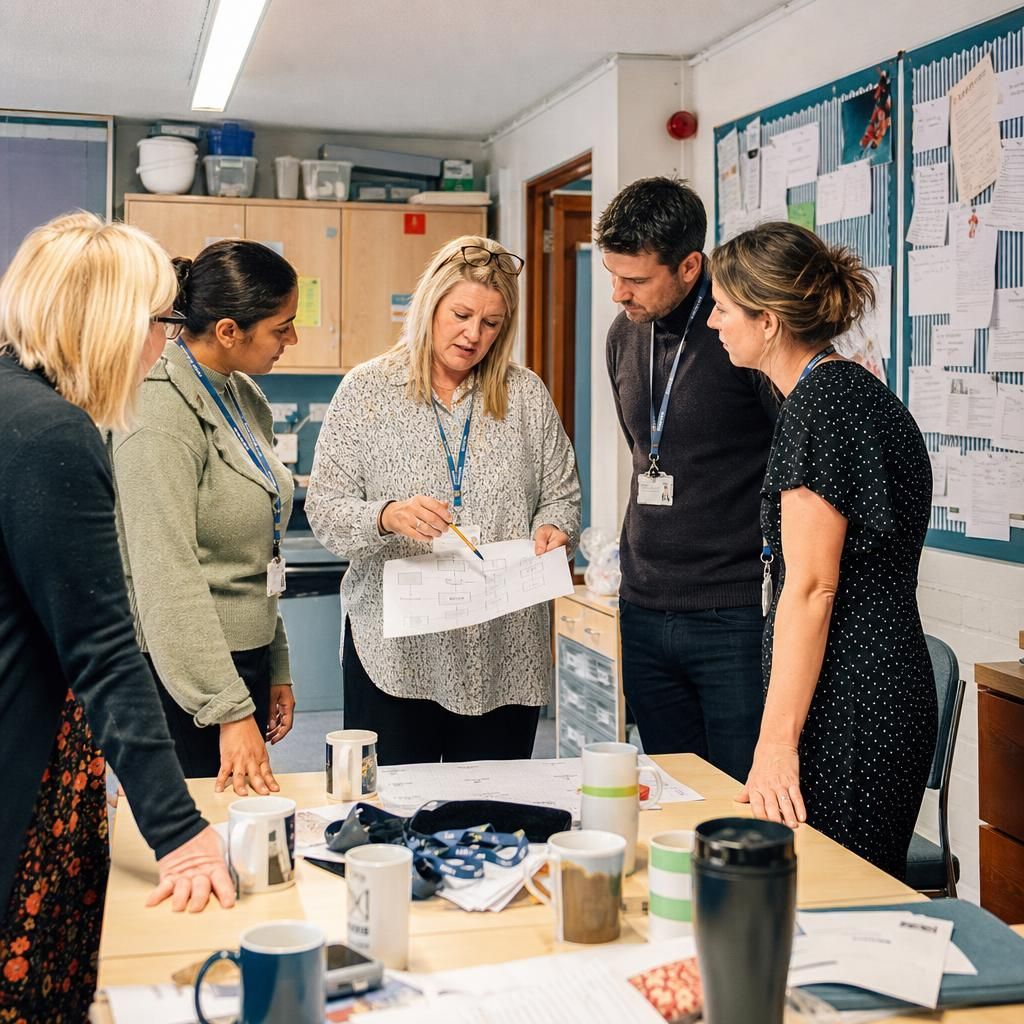
School staff gathered around neurodiversity training materials 

How does neurodiversity training for educators work in practice?

In practice, neurodiversity training for educators works best when it is interactive and case-based. Staff learn more when they discuss classroom scenarios, analyse barriers, and test reasonable adjustments against real situations.

A useful session might look at a student who misses verbal instructions, avoids noisy group work, or becomes distressed during unstructured time. The aim is to move from judgment to curiosity. Therefore, educators can identify what the student may be experiencing and which classroom changes would help. Some may come from a range of standard adaptation taught during initial teacher training with further individualised minor adjustments.

Why one-off awareness training is not enough

One-off awareness sessions are rarely enough to change classroom practice. They may increase understanding, but they often leave staff with ideas and no pathway for implementation.

Neurodiversity training for educators should be part of a wider culture of inclusion. Otherwise, schools risk treating neurodiversity as an add-on rather than a core part of teaching and safeguarding. A short talk can introduce concepts, but it cannot explore classroom routines, school policies, assessment pressures, behaviour approaches, or the needs of different year groups in depth.

Effective training also needs reflection time. Educators are more likely to change practice when they can consider their own assumptions, discuss challenges with colleagues, and revisit strategies after trying them. That is why AISee Collaborative often recommends training linked to consultation or follow-up support. It helps schools move from interest to action.

This matters for leadership teams too. Headteachers, SENCOs, inclusion leads, and local authority teams often want a clearer picture of what good looks like before they invest. A thoughtful programme should show staff how to reduce barriers in lessons, in movement around school, and in communication with families. It should also support consistent practice across classrooms, rather than leaving each educator to improvise alone.

For schools exploring how wider policy conversations are shaping demand, the petition calling for mandatory neurodiversity training for all education staff shows how strongly this issue is now being discussed. However, mandatory alone is not enough. Quality matters more than a checkbox.

Additionally, training should not stop at awareness of labels. It should support better decisions about access, dignity, and participation. That is where neurodiversity training for teachers becomes genuinely useful.

What is the risk of awareness-only training?

Awareness-only training can create confidence without competence. Staff may feel informed, yet still miss the practical changes that make a classroom more accessible.

As a result, students may continue to face the same barriers. Real learning happens when training is followed by reflection, implementation, and review.

What effective neurodiversity training for educators should cover

Effective neurodiversity training for educators should cover both understanding and action. It needs to explain differences clearly, then show how those differences affect classroom experience.

The most useful programmes usually include four core areas: neurodivergent experiences, reasonable adjustments, communication and behaviour, and collaboration with families. Each area should be discussed in a way that feels specific to school life.

AISee Collaborative’s holistic assessment of need approach fits well here, because it encourages staff to look beyond labels and focus on the student’s lived experience. That is important in schools where the same label can present very differently from one pupil to another.

Training should also help educators recognise the role of environment. Noise, unpredictability, social pressure, time constraints, and unclear instructions can all intensify stress. Good teaching reduces these barriers rather than expecting students to cope alone.

Many schools also want practical examples. For broader classroom ideas, the ABC News segment, How classrooms are changing to support neurodivergent students,

offers useful context on how schools are adapting. It can help staff see that inclusive design is already shaping practice in many settings.

Below are the areas every strong programme should cover.

Understanding neurodivergent experiences without stereotyping

Teachers need training that explains difference without flattening it into a list of traits. Neurodivergent students are not all the same, and labels never tell the full story.

Good neurodiversity training for educators should explore sensory needs, processing differences, masking, anxiety, communication styles, and executive functioning. It should also remind staff that visible confidence does not always equal ease. Many students work hard to hide difficulty.

Therefore, the training should encourage observation, listening, and curiosity. Staff should learn to ask what supports access, rather than assuming a student is unwilling or careless.

Reasonable adjustments in the classroom

Reasonable adjustments should be practical, proportionate, and routine. They are often small changes that make a large difference to access and participation.

Examples include clearer instructions, visual supports, reduced sensory overload, movement breaks, alternative ways to show learning, and predictable transitions. Teachers should also understand that good adjustments benefit many learners, not only those with diagnosed needs.

A strong session should help staff think through barriers in lessons, not just in exams or formal meetings. That is where neurodiversity training for teachers becomes immediately useful.

Communication, behaviour, distress, and unmet needs

Behaviour should be understood in context. Distress, shutdown, avoidance, or agitation may signal unmet needs, confusion, or overwhelm.

Teachers need tools for de-escalation, co-regulation, and calm communication. They should also know how tone, pace, and public correction can affect students. Nip in the Bud’s teacher-focused video, Autism Spectrum: Tips For Teachers,

is a helpful example of practical classroom thinking.

When staff frame behaviour as communication, they are better placed to support students without shame or punishment.

Working with families and carers

Families and carers often hold essential insight. They know what helps, what overwhelms, and what the student is working hard to manage.

Neurodiversity training for teachers should therefore include communication with families as a core skill. Staff should learn how to share concerns respectfully, discuss adjustments clearly, and avoid defensive conversations.

This also supports trust. When schools and families work together, students are more likely to experience consistency across settings.

Who should attend neurodiversity training in schools?

Neurodiversity training for teachers should not sit with classroom teachers alone. It works best when it includes everyone who shapes the school experience.

That means headteachers, SENCOs, deputy leaders, teaching assistants, pastoral teams, lunchtime supervisors, cover staff, and local authority education teams where relevant. In many schools, support staff are the people students see most often. They also need shared language and shared strategies.

Whole-school training matters because inconsistent practice creates confusion. A student may do well in one room and struggle in another simply because expectations, communication, or sensory conditions change. Therefore, the aim should be consistency with flexibility.

Leadership teams also play a crucial role. They decide whether neurodiversity training for teachers is treated as a one-off event or part of a wider inclusion plan. If leaders want sustainable change, they should include policy review, classroom observation, and follow-up support.

AISee Collaborative can support this through rights-based advocacy and guidance, as well as staff development. That combination is especially useful when schools are trying to align classroom practice with inclusion goals.

Ultimately, anyone who influences teaching, relationships, or access should be included. The wider the audience, the stronger the culture change.

Which staff groups are often overlooked?

Support staff, midday supervisors, and cover teachers are often overlooked, yet they shape daily student experience.

They benefit from the same language, boundaries, and strategies as teaching staff. Inconsistent responses can confuse students and weaken the impact of training.

What training formats work best for schools?

The best format depends on the school’s goals, but neurodiversity training for teachers is strongest when it combines learning with reflection and consultation.

INSET sessions work well for whole-school foundations. Workshops are useful for skill-building because they allow discussion and practice. Reflective sessions help staff examine real cases from their own classrooms. Consultation then turns learning into local action.

This blended approach is usually more effective than a single lecture. It allows schools to build confidence, test changes, and refine practice over time. It also makes training more relevant to different roles.

AISee Collaborative offers book-a-call and enquiry support for schools that want to explore the right structure. That matters because some schools need a short masterclass, while others need a broader programme with consultation and organisational support.

The strongest programmes are also collaborative. Staff should be able to bring real challenges into the room. That might include behaviour concerns, attendance issues, transitions, or accessibility barriers. When the learning is rooted in school reality, neurodiversity training for teachers becomes easier to use.

For some settings, a short course may be the first step. For others, a more sustained package is the right answer. Either way, the goal should be practical change, not passive attendance.

How should schools choose between workshops and consultation?

Workshops are best when the school needs shared understanding and immediate strategies. Consultation is best when the school needs tailored problem-solving or support with complex cases.

In many situations, both are helpful. Training creates the foundation, and consultation helps staff apply it with confidence.

What outcomes should schools expect from neurodiversity training for educators?

Schools should expect clearer thinking, better consistency, and more inclusive classroom decisions. Neurodiversity training for teachers should improve how staff recognise barriers, communicate with students, and adapt practice.

The most meaningful outcomes are often practical rather than dramatic. Teachers ask better questions. Support plans become more specific. Families feel heard more often. Students experience fewer avoidable barriers in lessons and transitions.

Schools should also expect better shared language. When staff understand neurodivergence in a similar way, they are less likely to send mixed messages. That consistency supports trust and reduces confusion.

Another sign of effective training is reflection. Staff begin to notice where school systems create pressure. They may reconsider homework expectations, behaviour scripts, sensory environments, or how instructions are delivered. That kind of review is valuable because it moves inclusion from theory into daily life.

AISee Collaborative’s approach is grounded in practical advocacy, training, and human-rights-informed support. That makes it suitable for schools that want more than awareness. It is designed to help teams make workable changes that reduce barriers.

Schools should not expect perfection after one session. However, they should expect a better foundation for action. If training is effective, staff leave with clearer next steps and a stronger sense of responsibility.

How can schools tell if training is working?

Training is working when staff behaviour changes, not just staff opinions.

Look for more consistent adjustments, better staff confidence, calmer transitions, improved collaboration with families, and stronger follow-up after concerns are raised.

Book neurodiversity training with AISee Collaborative

If you are looking for neurodiversity training for teachers that is practical, reflective, and neuroaffirming, AISee Collaborative can help. The focus is on everyday classroom decisions, not generic awareness.

That means training can be shaped around your school’s real priorities. You might want support with behaviour, accessibility, family communication, or whole-school consistency. You might also want a session that leads into consultation or wider organisational support.

This is where AISee Collaborative stands apart. The aim is not simply to inform staff. It is to help them make better decisions that improve access, dignity, and participation for neurodivergent students. In addition, the approach is grounded in lived experience, rights-based thinking, and practical problem-solving.

If your school wants to explore options, start with contacting AISee Collaborative for a conversation. You can also review education-focused support services and solutionising support to see how training can connect with wider inclusion work.

Neurodiversity training for teachers should not feel abstract. It should help your staff make classroom life easier to navigate for students who are often asked to adapt to systems that were not built for them. With the right training, schools can change that.

Key Takeaways

  • Neurodiversity training for teachers should be practical, reflective, and focused on real classroom decisions.
  • One-off awareness sessions are not enough unless they lead to consistent practice and follow-up support.
  • Effective training should cover neurodivergent experiences, reasonable adjustments, communication, behaviour, and family partnership.
  • Whole-school involvement matters, including teachers, support staff, and leaders.
  • AISee Collaborative positions neurodiversity training for teachers as a rights-based, neuroaffirming route to better inclusion.

Frequently Asked Questions

What should neurodiversity training for educators include?

It should include understanding neurodivergent experiences, reasonable adjustments, communication strategies, behaviour as communication, and partnership with families. Good neurodiversity training for teachers also connects these ideas to real classroom situations, so staff can use them immediately.

Is one awareness session enough?

Usually, no. One session can introduce ideas, but it rarely changes practice on its own. Neurodiversity training for teachers works best when it includes reflection, follow-up, and support for applying learning in the classroom.

Who should attend neurodiversity training in schools?

Ideally, everyone who shapes student experience should attend. That includes teachers, support staff, pastoral teams, leaders, and any staff member who interacts with pupils regularly. Shared understanding improves consistency and reduces barriers.

How do schools know if neurodiversity training is effective?

Training is effective when classroom practice changes. Look for clearer adjustments, better communication, more consistent responses to distress, and stronger collaboration with families. If staff only feel informed but do not change practice, the training has not gone far enough.

Recent Posts

By thom Kirkwood August 21, 2026
Long waits. Fragmented pathways. Families and practitioners doing their best with systems that weren't built to move fast. It's a familiar picture for anyone connected to neurodevelopmental and mental health support for children and young people - and it's the problem the heart of this new research proposal from AISee Collaborative Limited.
Rights based advocacy: What It Means and How It Protects Disabled and Neurodivergent People
By AISee Collaborative August 19, 2026
Rights based advocacy is about more than speaking up. It is a practical way to help disabled and neurodivergent people access their rights, challenge barriers, and be included in decisions that affect their lives. In the UK, that can mean support with a school meeting, a care review, a workplace adjustment, a complaint, or a benefits or service decision. It can also mean helping someone feel heard when professionals move too fast or use confusing language. At AISee Collaborative, rights based…

Neurodiversity Training for Employers: Practical Workplace Inclusion That Reduces Barriers
By AISee Collaborative August 14, 2026
Neurodiversity training for employers is most effective when it goes beyond awareness and leads to real workplace change. It should help managers, HR teams, and leaders understand how barriers appear in everyday tasks, meetings, recruitment, communication, and performance processes. It should also show what reasonable adjustments look like in practice, so inclusion becomes part of normal working life rather than an afterthought. That is the approach AISee Collaborative brings to rights-based…

Why Is Neurodiversity Important in Education, Work, Health, and Care?
By AISee Collaborative August 13, 2026
Why is autism, ADHD and neurodiversity important? Because it changes how we understand people, not just how we support them. Neurodiversity recognises that brains, learning styles, communication needs, and processing patterns vary naturally across the population. That matters in schools, workplaces, health services, and social care because exclusion often starts when systems expect one “right” way to think or behave. A more inclusive approach reduces harm, improves access, and supports better…

Co-production Neurodiversity: How to Design Better Services With People, Not For Them
By AISee Collaborative August 12, 2026
Inclusive neurodivergent Co-production is a practical way to build services that work in real life. It means neurodivergent people help shape decisions, language, access, and delivery from the outset, rather than being asked for feedback after the main choices are already made. That difference matters in public-sector settings, where a service can look inclusive on paper but still fail in practice. For AISee Collaborative, co-production connects directly to advocacy, assessment of need…
Education Advocacy for Neurodivergent Learners and Families
By AISee Collaborative August 11, 2026
Education advocacy neurodiversity is about making sure learners are understood, heard, and supported in real school settings. For many families, the challenge is not just getting a meeting. It is getting the right information, the right people at the table, and a plan that actually works after everyone leaves the room. That is where structured advocacy matters. It helps with school communication, support planning, exclusion risk, attendance concerns, and the practical steps that turn concern…
Why Neurodivergent-Led Advocacy Matters
By AISee Collaborative August 5, 2026
Neurodivergent led advocacy is advocacy shaped by lived experience, not just theory. That matters because people do not only need information; they need support that understands how systems feel from the inside. When advocacy is led by neurodivergent people, it is more likely to respect communication differences, sensory needs, executive functioning barriers, and the reality of power imbalance. It can also reduce the risk of being misunderstood, dismissed, or pushed into one-size-fits-all…

Reasonable Adjustments Support for Education, Work, Health, and Care
By AISee Collaborative August 4, 2026
Reasonable adjustments support helps people move from uncertainty to action. If you know a barrier exists, but you are not sure what change is needed, this service-led approach can help identify the issue, shape the request, and turn it into something practical. At AISee Collaborative, reasonable adjustments support is person-centred, rights-based, and focused on outcomes that work in real settings. That may mean help for an individual, a family, a school, an employer, or a health or…

Reasonable Adjustments Meaning: What They Are and How to Ask for Support
By AISee Collaborative August 2, 2026
If you are searching for reasonable adjustments, you probably want a plain-English answer, not legal jargon. In simple terms, reasonable adjustments are changes that help remove barriers caused by disability, neurodivergence, or a health condition. They can be small, practical, and highly effective. For example, that might mean a quieter appointment room, clear written instructions, more time, or a different way to communicate. The point is not to give someone special treatment. The point is…

Neurodiversity Training for Employees: Building Safer, More Inclusive Workplaces
By AISee Collaborative July 30, 2026
Neurodiversity training for employees is not just about awareness. It is about giving teams the language, confidence, and practical habits they need to work well with difference. When organisations understand neurodiversity, they are better placed to reduce misunderstandings, support wellbeing, and make adjustments before small issues become complaints or formal disputes. For employers, the value is clear. Neurodiversity training for employees can improve communication, clarify expectations…
Show More