Education Advocacy for Neurodivergent Learners and Families

AISee Collaborative • August 11, 2026

Share this article

Education advocacy neurodiversity is about making sure learners are understood, heard, and supported in real school settings. For many families, the challenge is not just getting a meeting. It is getting the right information, the right people at the table, and a plan that actually works after everyone leaves the room. That is where structured advocacy matters. It helps with school communication, support planning, exclusion risk, attendance concerns, and the practical steps that turn concern into action.

At AISee Collaborative, this work sits within person-centred, rights-based support. We focus on barriers, reasonable adjustments, and outcomes that can be reviewed and acted on. If you are exploring support, you may also find our advocacy and guidance services useful, especially when school meetings feel unclear or overwhelming. Education advocacy neurodiversity is not about confrontation. It is about clarity, preparation, and making sure the learner’s experience is taken seriously from the start.

What is education advocacy neurodiversity?

Education advocacy neurodiversity means helping neurodivergent learners access education on fairer terms. It brings together communication support, rights awareness, and practical problem-solving so families and professionals can work from the same plan.

In simple terms, education advocacy neurodiversity helps people explain what is happening, what is needed, and what support should happen next. It is especially useful when a child or young person struggles to be understood in school because of autism, ADHD, dyslexia, dyspraxia, Tourette’s, or overlapping needs.

This is also where language matters. Neurodiversity is a broad term for the fact that brains work differently. Advocacy is the active support that helps a person be heard and responded to. Together, education advocacy neurodiversity creates a bridge between lived experience and school systems.

A useful comparison is self-advocacy. The University of Derby’s guide on study skills for neurodivergent students and self-advocacy shows why students need tools to explain their needs clearly. However, many learners need adult support before they can do that confidently.

If you want support tailored to school, family, or service settings, AISee also offers neurodiversity advocacy in the UK and assessment of need support. Those services can help identify what is getting in the way and what adjustments may be realistic.

Education advocacy neurodiversity is most effective when it is person-centred. That means the learner’s experience leads the conversation. It also means plans are specific, not vague. For example, “more support” is not enough. A useful outcome might be a quiet space at break, a predictable check-in, a reduced transition load, or a communication method that does not rely on verbal pressure.

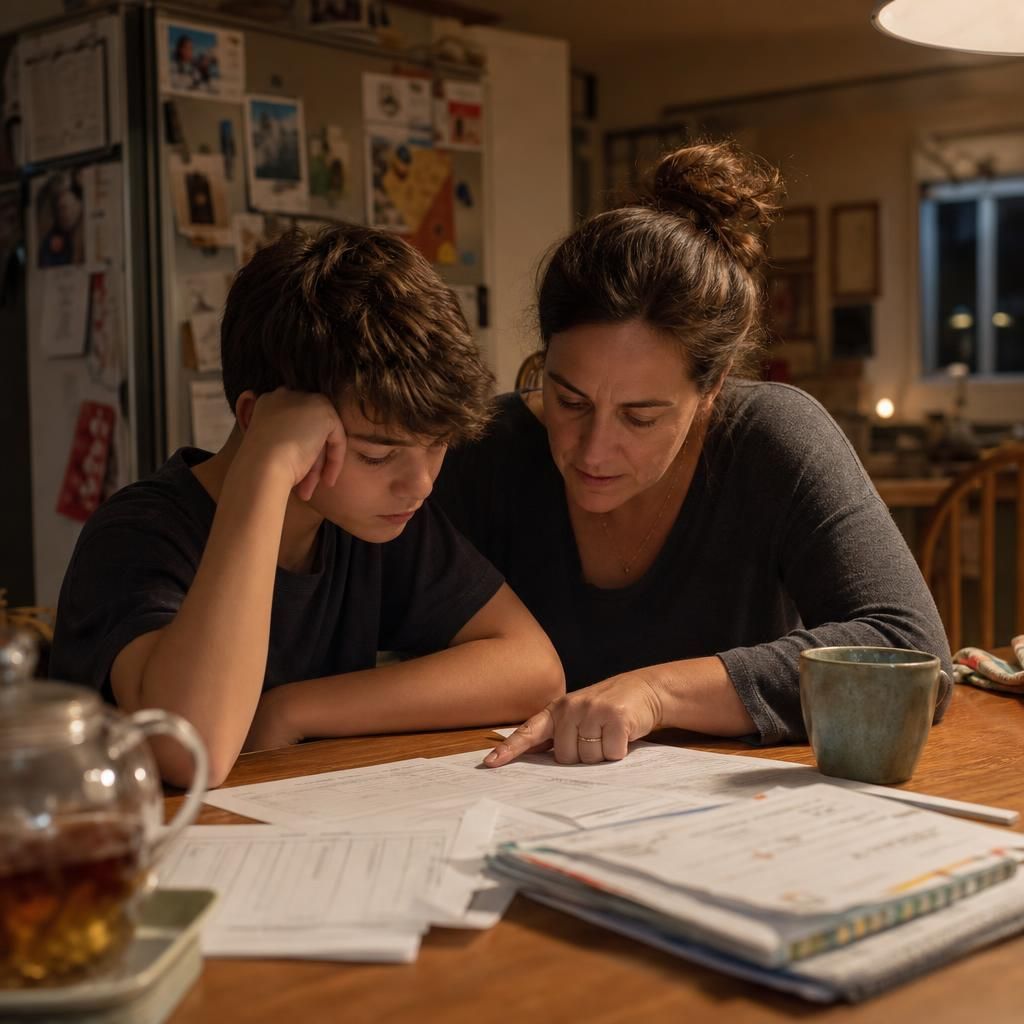
Parent and student reviewing school papers at kitchen table 

How does neurodiversity affect learning and education?

Neurodiversity affects learning by changing how a person processes information, manages attention, handles change, or responds to sensory input. That can influence reading, writing, organisation, attendance, emotional regulation, exam access, and classroom participation.

The impact is not always visible. A learner may look fine in class but struggle to decode instructions, recover from noise, or cope with unplanned change. Consequently, education advocacy neurodiversity often focuses on what the school sees less easily: shutdowns, masking, exhaustion, and fear of asking for help.

A good advocacy conversation makes those hidden barriers visible. It turns a pattern into an explanation, and an explanation into a support plan.

When families may need education advocacy neurodiversity

Families usually need education advocacy neurodiversity when concerns keep repeating and support is still not working. It is also helpful when meetings become confusing, attendance drops, or a learner feels unsafe, isolated, or blamed.

Common moments include reviews that do not lead to change, feedback that feels dismissive, or school reports that describe behaviour without exploring cause. In those situations, education advocacy neurodiversity can help families organise evidence, clarify priorities, and keep the discussion focused on need rather than assumptions.

This support is also useful when exclusion risk is rising. That may include repeated part-time timetables, fixed-term exclusions, informal send-home calls, or pressure to reduce attendance without a proper plan. In many cases, the issue is not willingness. It is that the environment has not been adjusted enough.

For practical school guidance, you may also find how to support neurodiverse students helpful. It links naturally to this service page because families often need both learner-focused guidance and meeting support.

If the problem is broader than one school, the issue may be systemic. In that case, AISee’s solutionising and barrier-reduction support can help teams look at patterns, communication gaps, and next steps.

A brief external perspective can also help families prepare. The guide on how to advocate for your child at school gives a parent-focused starting point. Likewise, the article on advocacy and neurodiversity reinforces why informed support matters when systems feel hard to navigate.

Education advocacy neurodiversity is most valuable when the problem is not just one meeting. It is the need for sustained, structured change.

What are the warning signs that support is not working?

The warning signs are usually practical. The learner may be missing school, becoming distressed before transitions, losing confidence, or receiving responses that do not match their needs.

Another sign is inconsistency. One professional may understand the issue, while another dismisses it. That is a clear cue for education advocacy neurodiversity, because the family then needs a shared record, a common language, and a firmer plan.

What an advocate can help with before, during, and after meetings

An advocate can help before, during, and after meetings by keeping the process structured and focused. That is one of the main strengths of education advocacy neurodiversity.

Before the meeting, support may include reviewing reports, identifying key concerns, drafting priorities, and deciding what good outcomes would look like. During the meeting, an advocate can help slow the pace, clarify jargon, and make sure the learner’s needs are properly recorded. After the meeting, the work continues. Someone still has to check whether actions were agreed, who is responsible, and when the plan will be reviewed.

This matters because many education meetings are overloaded with information. Without support, families can leave without clear decisions. Education advocacy neurodiversity reduces that risk by turning a difficult conversation into a practical sequence.

AISee’s advocating support is designed for that kind of real-world coordination. If you need to understand the underlying need first, identifying support and assessment of need can help build a stronger case for adjustments.

Here is what an advocate often helps with:
- clarifying the main issue in plain language
- preparing questions and priorities
- identifying gaps in evidence or reports
- keeping the learner’s experience central
- recording actions, owners, and review dates
- following up when promises are delayed

A professional perspective on this kind of work is also reflected in the presentation Neurodiversity and Advocacy by CATTS Ireland. For families and schools, it is a useful reminder that advocacy works best when it is practical and collaborative.

Education advocacy neurodiversity does not replace school staff. Instead, it helps everyone stay focused on what needs to change and what can be changed now.

What are the 3 C's of advocacy?

The 3 C’s of advocacy are commonly understood as clarity, communication, and consistency. These three elements help people explain needs, keep messages aligned, and follow through on agreed actions.

In education advocacy neurodiversity, the 3 C’s matter because school systems can be fragmented. Clarity stops the conversation from drifting. Communication keeps everyone on the same page. Consistency helps turn a one-off discussion into a lasting support plan.

Supporting communication between families and schools

Good communication is often the difference between a stalled process and a workable plan. Education advocacy neurodiversity helps families and schools communicate in ways that reduce defensiveness and increase understanding.

This may involve choosing the right format, using written summaries, avoiding rushed conversations at the school gate, and checking that everyone agrees on the same facts. It also means making space for neurodivergent communication styles. Some people need time to process. Others communicate best in writing. Some need questions in advance.

When communication breaks down, the issue is rarely just attitude. It is often mismatch. The learner may be overwhelmed, parents may feel ignored, and staff may be relying on short appointments that cannot hold the full picture. Therefore, education advocacy neurodiversity creates a safer structure for discussion.

AISee’s education and training support can strengthen this further, especially where schools want to improve inclusive practice rather than solve one case at a time. In addition, our neurodiversity consulting page explains how practical consultation can support wider organisational change.

For professionals looking for a broader framework, a useful video is the Perkins School for the Blind presentation, A Neurodiversity-Affirming Lens to Advocacy. It reinforces a key point: effective advocacy should not ask learners to fit the system without support.

Education advocacy neurodiversity works best when communication is predictable, respectful, and documented. That gives everyone a clearer route forward.

Reasonable adjustments and inclusive practice in education advocacy neurodiversity

Reasonable adjustments are the practical changes that make access fairer. In education advocacy neurodiversity, they are often the main outcome families are trying to secure.

A reasonable adjustment might be a visual timetable, reduced sensory load, extra processing time, written instructions, a quieter location, a structured exit from lessons, or a different way of showing learning. The right adjustment depends on the learner and the barrier.

Inclusive practice goes further. It means schools design environments that reduce avoidable barriers before they become crises. As a result, fewer learners are pushed into repeated breakdowns, conflict, or exclusion risk.

If you need direct support with this area, reasonable adjustments support is closely aligned with education advocacy neurodiversity. The page on reasonable adjustments meaning also helps explain what schools should consider.

Reasonable adjustments work best when they are:
- specific
- agreed in writing
- realistic for the setting
- reviewed over time
- based on the learner’s actual barriers

Not every request will be straightforward, but vague support is rarely enough. Education advocacy neurodiversity helps turn “we will see how it goes” into something more accountable.

For service providers and school leaders, AISee also offers neurodiversity training for teachers. That can support the wider culture needed for lasting inclusion.

Reasonable adjustments are not a bonus. They are part of making access workable. In education advocacy neurodiversity, that principle keeps the focus on fairness, not favour.

How do you know which adjustment to ask for?

Start with the barrier, not the label. If the barrier is noise, ask for a quieter space or sensory break. If the barrier is processing time, ask for written follow-up and time to respond.

This is where education advocacy neurodiversity is most useful. It helps connect the lived problem to a practical change that school can actually implement.

How AISee approaches education advocacy neurodiversity

AISee Collaborative approaches education advocacy neurodiversity through person-centred, rights-based, and solution-focused support. That means we look at what is happening, what is getting in the way, and what can be changed next.

Our work is not limited to one meeting. It may include advocacy, assessment of need, organisational guidance, and practical solution planning. Where needed, we can help families and professionals work across education, health, and care systems.

This matters because many cases are not simple. A learner may have attendance concerns, communication barriers, sensory distress, and delayed support all at once. Education advocacy neurodiversity needs to handle that complexity without losing the person in the process.

If you are comparing support options, the service pages on neurodiversity advocacy in the UK and contacting AISee Collaborative are good starting points. They help you decide what type of support fits the issue.

We also recognise that families often want help that is understandable and timely. Therefore, we focus on practical steps, not jargon. That may include meeting preparation, barrier mapping, recommendation writing, or helping teams think through next actions.

Education advocacy neurodiversity should feel useful from the start. It should reduce confusion, improve confidence, and leave people clearer about what happens next. That is the standard we work to.

Request support

If you need help with a school meeting, support plan, exclusion concern, or communication breakdown, now is the right time to ask. Education advocacy neurodiversity works best when support starts before pressure builds further.

You do not need to have every answer ready. You only need a clear sense that something is not working and that the current approach is not enough. From there, we can help identify barriers, prepare for meetings, and agree practical next steps.

For a conversation about person-centred support, use AISee Collaborative contact options. If your need is broader, you may also want to explore solutionising support for multi-agency problem solving.

Education advocacy neurodiversity is about making systems easier to navigate and support more workable for the learner. When the right people are involved, small changes can make a large difference.

Key Takeaways

  • Education advocacy neurodiversity helps families and learners prepare for meetings, explain needs clearly, and secure practical support.
  • The biggest risks are often communication breakdown, unmet needs, exclusion pressure, and vague plans that never become action.
  • Reasonable adjustments should be specific, written down, and reviewed, not treated as optional extras.
  • Effective advocacy supports the whole process: before, during, and after meetings.
  • AISee Collaborative offers person-centred, rights-based support for families, schools, and services.

Frequently Asked Questions

What is neurodiversity advocacy?

Neurodiversity advocacy is support that helps neurodivergent people have their needs understood and acted on. It focuses on rights, communication, and practical adjustments, rather than asking the person to cope alone. In education advocacy neurodiversity, that means helping families and learners prepare for meetings, explain barriers, and secure meaningful support.

What are the 3 C's of advocacy?

The 3 C’s are commonly understood as clarity, communication, and consistency. They help people explain needs clearly, keep messages aligned, and follow through on actions. In education advocacy neurodiversity, those three habits make meetings more productive and reduce the chance of misunderstandings.

How does neurodiversity affect learning and education?

Neurodiversity can affect attention, memory, organisation, sensory processing, social communication, and emotional regulation. As a result, a learner may find some parts of school easy and others very difficult. Education advocacy neurodiversity helps schools respond to those differences with appropriate adjustments and realistic support.

Recent Posts

Co-production Neurodiversity: How to Design Better Services With People, Not For Them
By AISee Collaborative August 12, 2026
Inclusive neurodivergent Co-production is a practical way to build services that work in real life. It means neurodivergent people help shape decisions, language, access, and delivery from the outset, rather than being asked for feedback after the main choices are already made. That difference matters in public-sector settings, where a service can look inclusive on paper but still fail in practice. For AISee Collaborative, co-production connects directly to advocacy, assessment of need…
Why Neurodivergent-Led Advocacy Matters
By AISee Collaborative August 5, 2026
Neurodivergent led advocacy is advocacy shaped by lived experience, not just theory. That matters because people do not only need information; they need support that understands how systems feel from the inside. When advocacy is led by neurodivergent people, it is more likely to respect communication differences, sensory needs, executive functioning barriers, and the reality of power imbalance. It can also reduce the risk of being misunderstood, dismissed, or pushed into one-size-fits-all…

Reasonable Adjustments Support for Education, Work, Health, and Care
By AISee Collaborative August 4, 2026
Reasonable adjustments support helps people move from uncertainty to action. If you know a barrier exists, but you are not sure what change is needed, this service-led approach can help identify the issue, shape the request, and turn it into something practical. At AISee Collaborative, reasonable adjustments support is person-centred, rights-based, and focused on outcomes that work in real settings. That may mean help for an individual, a family, a school, an employer, or a health or…

Reasonable Adjustments Meaning: What They Are and How to Ask for Support
By AISee Collaborative August 2, 2026
If you are searching for reasonable adjustments, you probably want a plain-English answer, not legal jargon. In simple terms, reasonable adjustments are changes that help remove barriers caused by disability, neurodivergence, or a health condition. They can be small, practical, and highly effective. For example, that might mean a quieter appointment room, clear written instructions, more time, or a different way to communicate. The point is not to give someone special treatment. The point is…

Neurodiversity Training for Employees: Building Safer, More Inclusive Workplaces
By AISee Collaborative July 30, 2026
Neurodiversity training for employees is not just about awareness. It is about giving teams the language, confidence, and practical habits they need to work well with difference. When organisations understand neurodiversity, they are better placed to reduce misunderstandings, support wellbeing, and make adjustments before small issues become complaints or formal disputes. For employers, the value is clear. Neurodiversity training for employees can improve communication, clarify expectations…
Daily living skills assessment checklist on a desk
July 29, 2026
Discover how the AISee Daily Living Skills Assessment identifies practical assets and needs across 68 categories to support neurodivergent individuals and families.
Neurodiversity Training for Teachers: What Effective Training Should Include
By AISee Collaborative July 29, 2026
Neurodiversity training for teachers should do more than raise awareness. It should help educators make better everyday decisions about communication, classroom routines, behaviour, access, and belonging. When training is practical and neuroaffirming, staff are more confident about supporting students without relying on assumptions or stereotypes. That matters because inclusive teaching is built in small moments: how instructions are given, how transitions are handled, and how needs are…
How to Support Neurodiverse Students: A Practical Guide for Inclusive Classrooms
By AISee Collaborative July 27, 2026
Understanding how to support neurodiverse students starts with a simple shift: stop asking students to fit the classroom, and start shaping the classroom around real needs. Neurodiverse learners are not a problem to fix. They are learners who may process information, communication, movement, sensory input, or social expectations differently. That difference needs practical support, not assumptions. This guide from AISee Collaborative focuses on what educators can do in everyday practice. It…
Digital cognitive support tool for neurodivergent individuals.
July 26, 2026
Discover how cognitive technology and the AISee-Abilia partnership support Autism and ADHD through evidence-based digital assistive tools and solutions.
Diverse group of people collaborating on neurodiversity solutions.
July 25, 2026
Discover how the AISee Pathway supports families, individuals, and practitioners through Advocating, Identifying, Solutionising, Educating, and Empowering collaboration.
Show More