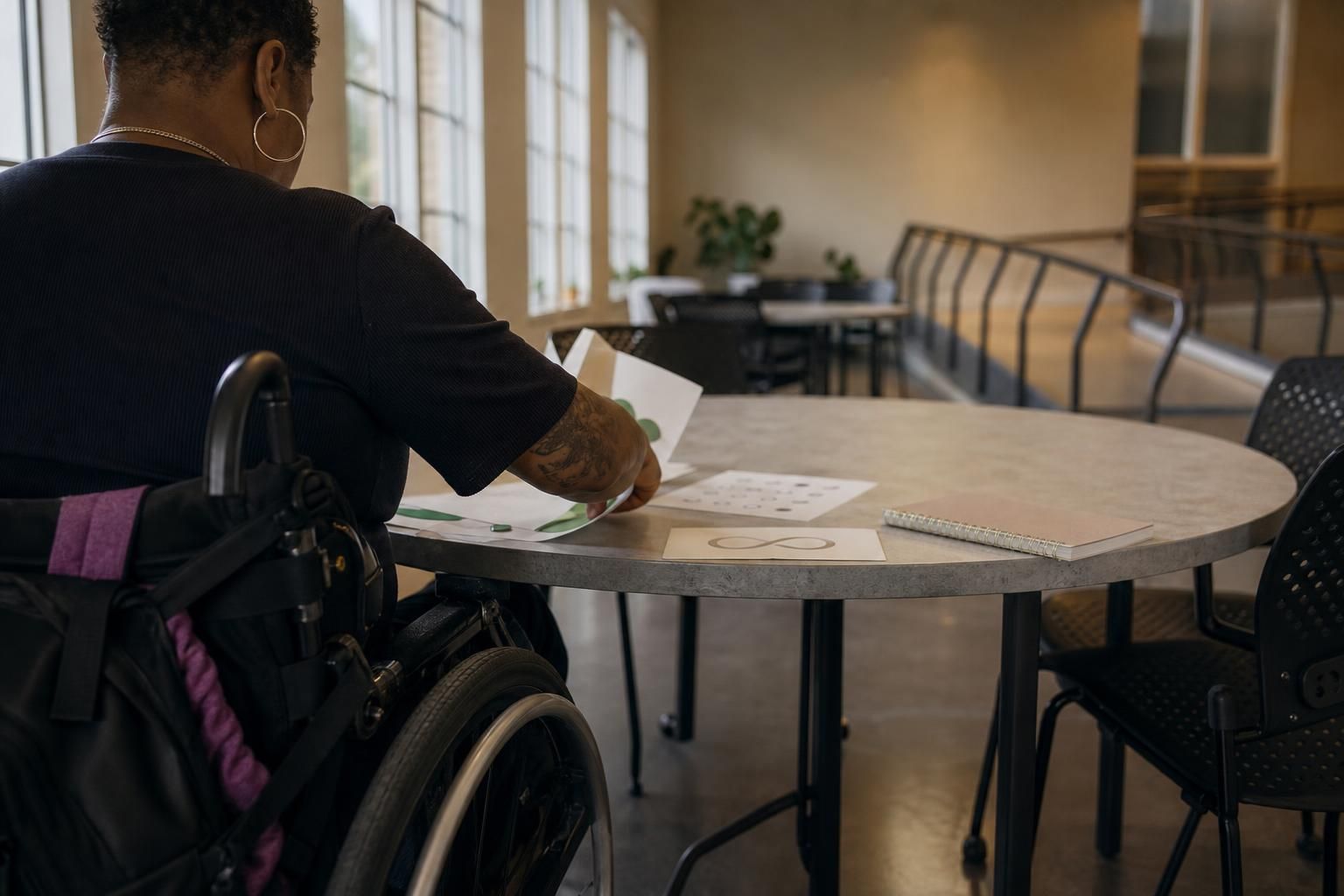





Autism, ADHD and Neurodiversity in Justice: Benefits of Indicative Profiling
Indicative profiling for Autism and ADHD in the justice system refers to using evidence-based screening tools to identify neurodivergent traits early. This proactive approach facilitates tailored support, prevents the escalation of behavioral issues into criminal matters, and ensures rehabilitation strategies are accessible and effective for neurodivergent individuals within the legal system.
What is indicative profiling for Autism and ADHD?
Indicative profiling is a preliminary assessment method used to identify the likelihood that an individual has a neurodivergent profile, such as Autism Spectrum Disorder (ASD) or Attention Deficit Hyperactivity Disorder (ADHD). Unlike a formal clinical diagnosis, which can take years to obtain due to long waiting lists, indicative profiling provides immediate, actionable data. It uses standardized screening tools to highlight specific strengths, challenges, and support needs. A practice that could be dovetailed within current systems, gathering via a range of tools, coloration of evidence from various sources, supporting informed solutions for better outcome.
In the context of the justice system, indicative profiling acts as a 'red flag' system. It alerts practitioners—ranging from police officers to social workers—that an individual may process information differently, struggle with social communication, or have executive functioning difficulties. This information is vital for ensuring that the individual is treated fairly and that their rights are protected from the moment of first contact.
Key components of indicative profiling include:
- Screening for sensory processing sensitivities.
- Identifying communication and language barriers.
- Assessing executive functioning and impulse control.
- Evaluating social interaction styles.
- Documenting historical behavioral patterns.
By focusing on the individual's functional profile rather than just a diagnostic label, indicative profiling allows for immediate adjustments in how authority figures interact with the person. This might include using clearer language, providing a quiet environment for interviews, or allowing extra time for processing questions, all relevant in posing an additional question - Is there a need for an appropriate adult, other professional to be involved in the whole process to ensure rights and communications are fully supported?
How does neurodiversity affect justice system outcomes?
Neurodivergent individuals, particularly those with Autism and ADHD, are significantly overrepresented in the justice system. Often, this is not due to a predisposition toward criminality, but rather a failure of the system to recognize and accommodate neurodivergent traits. When a person's neurological differences are misunderstood, their behavior can be misinterpreted as non-compliance, aggression, or lack of remorse.
For example, an autistic person experiencing sensory overload during a police stop might engage in 'stimming' (repetitive movements) or fail to make eye contact, both can often be normal for some on the spectrum. A law enforcement officer untrained in neurodiversity might view this as suspicious or evasive behaviour, leading to an unnecessary escalation. Similarly, an individual with ADHD might struggle with impulsivity or fail to understand the long-term consequences of their actions, leading them into legal trouble that could have been avoided with earlier intervention. A sister organisation of AISee have developed a proposal for Health Responder App, a tool which would be of exceptional value to many.
Common challenges faced by neurodivergent people in the justice system include:
- Misinterpretation of body language and tone.
- Difficulty navigating complex legal terminology.
- Vulnerability to 'compliance' or giving false confessions under pressure.
- Overwhelming sensory environments in police stations and courts.
- Inadequate support during the transition back into the community.
Without Identifying these traits early, the justice system risks criminalizing disability. This not only harms the individual but also fails the community by not addressing the underlying causes of the behavior. Indicative profiling serves as the first step toward changing these outcomes by providing the context necessary for informed decision-making.
The Role of Early Assessment Tools
To move toward a more equitable system, the adoption of earlier indicative assessment tools is essential. Tools like for example the Development and Well-Being Assessment (DAWBA) can be used to gather comprehensive data from multiple sources, including parents, teachers, and the individuals themselves. You can view an Anonymised Sample DAWBA Report to see the depth of information these tools provide.
These tools are designed to be accessible and can be administered by trained raters/professionals who are not necessarily specialist clinicians, but it is beneficial that the this process is dovetailed into a clinical assessment pathway. This lowers the barrier to obtaining vital information. When used early—ideally before a young person even enters the justice system—these assessments can trigger the provision of support in schools and at home, potentially redirecting a life path away from the legal system.
Effective assessment tools should focus on:
- Functional impacts on daily life.
- Cognitive and emotional regulation profiles.
- Developmental history and milestones.
- Environmental triggers for distress.
- Strengths that can be leveraged for rehabilitation.
By integrating these tools into social work, education, and youth services, we can create a safety net that catches neurodivergent individuals before they reach a crisis point. At AISee Collaborative, we focus on Solutionising these systemic gaps by advocating for the widespread use of these types of tools, including for example AISee's daily living skills assessment, soon to be a Functional Skills and Coping assessment, the use of A-TAC, the SDQ/DAWBAtools. This is not about labelling for the sake of it; it is about providing the data needed for Informed Solutions for Better Outcomes .
Can early screening prevent justice system involvement?
Prevention is the most effective way to improve outcomes for neurodivergent individuals. Early screening allows for the implementation of 'Pre-Justice' interventions. When parents, teachers, and youth leaders understand a child’s profile, they can adapt their environment to reduce the likelihood of 'meltdowns' or impulsive actions that might lead to police involvement.
For many young people, contact with the justice system is the result of unmet needs. An undiagnosed ADHD student may be excluded from school due to disruptive behavior, leading to a lack of supervision and increased vulnerability to criminal exploitation. If that student had been identified through indicative profiling, the school could have provided ADHD-specific support, keeping them engaged in education and away from the streets.
Prevention through profiling involves:
- Early identification in primary and secondary education.
- Training for youth leaders and social workers.
- Support for parents to manage neurodivergent behaviors at home.
- Diversion programs that prioritize support over punishment.
- Collaborative data sharing between health and justice sectors.
When we invest in identification, corelation of evidential data, we invest in prevention. It is far more cost-effective and humane to support a neurodivergent child in school than it is to process them through the children’s hearing system or the courts later in life. Our Submissions to Policy and Parliament consistently highlight the need for this shift in focus from reactive to proactive care.
Benefits of Indicative Profiling for Rehabilitation
For those who are already within the justice system, indicative profiling is a game-changer for rehabilitation. Standard rehabilitation programs often rely heavily on group therapy, verbal communication, and strict adherence to schedules—areas where many neurodivergent people naturally struggle. Without adjustments, these individuals are often set up to fail, leading to high rates of recidivism.
With an indicative profile, a probation officer or a prison educator can tailor their approach. If the profile shows high levels of social anxiety or difficulty processing verbal instructions, rehabilitation can be moved to one-on-one sessions or provided with visual aids. This makes the intervention accessible, increasing the chances of a successful transition back into society.
Rehabilitation benefits include:
- Personalized community service plans.
- Specific mental health and neuro-informed therapies.
- Better engagement with educational opportunities in prison.
- Reduced conflict within custodial settings.
- Clearer communication between the individual and their support team.
By Empowering individuals with an understanding of their own brain, we give them the tools they need to manage their challenges. Rehabilitation should be about growth and skill-building, which is only possible when the underlying neurobiology of the person is understood and respected.
Who benefits from neurodiversity-informed justice?
A neurodiversity-informed justice system doesn't just benefit the individual; it benefits every stakeholder involved. When the system works better for neurodivergent people, it generally becomes more efficient and fairer for everyone.
- Law Enforcement: Officers feel more confident and competent when they have the tools and training to recognize neurodivergence, leading to safer interactions and more accurate investigations.
- The Judiciary: Judges and magistrates can make more informed sentencing decisions that prioritize effective rehabilitation over ineffective incarceration.
- Families and Carers: Families feel supported and heard, rather than blamed, when their loved one’s neurodivergence is recognized as a factor in their behavior.
- Social Workers and Educationalists: These professionals can use profiling data to advocate for the right resources and placements for their clients.
- The Public: A system that successfully rehabilitates rather than just punishes reduces crime rates and increases public safety.
Through Advocating for these changes, we aim to build a system where the unique needs of every individual are considered. This collective benefit is the cornerstone of our mission at AISee Collaborative.
Implementing Change with AISee Collaborative
At AISee Collaborative Limited, we believe that the meeting of minds is the key to lowering barriers. As a neurodivergent-led organization, we bring lived experience and professional expertise to the table. We stand for Advocating, Identifying, Solutionising, Educating, and Empowering with Collaboration.
Given the current available data that we have been able access:
Currently 65,000 waiting in Scotland (42,000 are children, 23000 adults) ADHD and autism waiting lists hit crisis point as psychiatrists demand urgent national plan
97% of over 60-year-old autistic females, 95% ADHD and 85% of all autistic people undiagnosed Around 90% of middle-aged and older autistic adults are undiagnosed in the UK, new review finds | King's College London
4-9 times more likely to die by suicide https://www.autistica.org.uk/downloads/files/Personal-tragedies-public-crisis-ONLINE.pd
Over 70% of neurodivergent people have co-occurring mental health issues & Over 80% of people in neurodivergent people are NEETs https://www.gov.scot/publications/microsegmentation-autism-spectrum/
80%+ prison population in England and Wales https://www.mirror.co.uk/news/politics/dis-life-neurodiverse-people-failed-30770620
Cross over representation of neurodivergent care experienced children and young people (five times the rate for neurotypical children) Neurodiversity 101: Why we need to care more for the children in care!
Youth Justice -
Justice for children with SEND & neurodivergence: A review into the current system’s failings Neurodiversity – a whole-child approach for youth justice
Intersecting issued of race, poverty and other ACEs over representation of children young people and adults within poor and ethnic minority communities. & 90% of neurodivergent women with LD have experienced sexual abuse. Unheard-Unequal-Unjust–-But-not-Hidden.pdf (scld.org.uk)
80% children and young people who have been cautioned and sentenced in England Wales YJS have ASN or are neurodivergent. Justice for children with SEND & neurodivergence: A review into the current system’s failings
Surely, the default is 'Now is time for change'
Implementing change requires a multi-agency approach. It means the police, the courts, and the health service working together to share information, as far as possible always with individual and or families consent, and strategies. Our Informed Solutions for Better Outcomes Pilot Project Report demonstrates that when we collaborate, we can create a system that truly supports neurodivergent individuals toward better life outcomes.
AISee Collaborative and partners Autism Coordination Resouce Hub - South Lanarkshire Council and Scottish ADHD Coalition are presenting '1000 Times Better' Workshop at this years Children's and Young Peoples Centre for Justice. The title of workshop is actually a quote from the pilots by a Team Lead Youth Justice, social worker. Another quote from the project report “I wish All young people had access to this project. I feel this should be central to assessing unmet needs in school and helping schools (and parents) and social work get the resources they require.” Parent/Professional . Both of those fellow professionals are contributing to at the same conference within their own specialism. An illustration that such a proactive practice of indicative profiling, can serve multi-agency and individual and family with positive collaborative partnerships.
Summary of Indicative Profiling in the Justice System
Indicative profiling is a vital bridge between the recognition of neurodivergent traits and the implementation of effective support. By utilizing earlier indicative assessment tools, the justice system can move from a one-size-fits-all model to a personalized approach that prioritizes prevention and meaningful rehabilitation. This strategy addresses the root causes of neurodivergent involvement in the legal system, ensuring fairer treatment and better outcomes for individuals and society at large.
Core Takeaways:
- Indicative profiling provides immediate, functional data that clinical diagnosis may delay.
- Early identification reduces the risk of unnecessary criminalization and escalation.
- Assessment tools like DAWBA empower professionals to provide targeted support.
- Neuro-informed rehabilitation significantly reduces recidivism rates by addressing specific needs.
- Collaboration between agencies is essential for a systemic shift toward neuro-equity.
If you are a professional in the justice, education, or social work sectors looking to implement these tools, please Contact us to learn how we can support your journey toward informed solutions. Together, we can ensure that neurodivergent individuals are seen, understood, and empowered to succeed.
Recent Posts