


Peer Advocacy - From passive recipients to trained active certificated participants
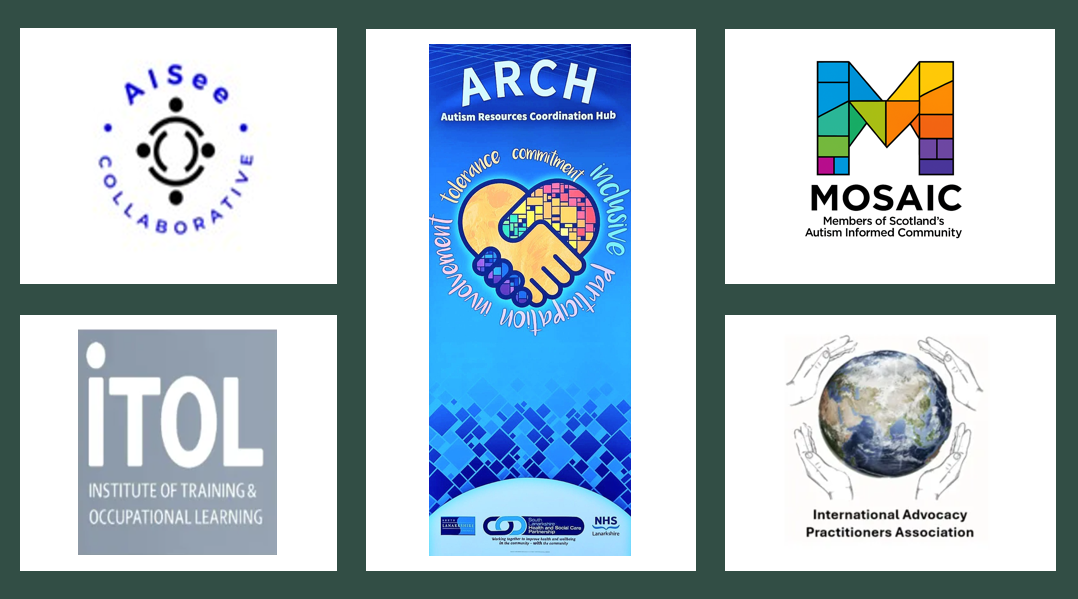
Peer Advocacy training empowers individuals with lived experience to support others within their community. AISee Collaborative provides Institute of Training and Occupational Learning, ITOL-accredited training programs that bridge the gap between service users' local authorities and more, ensuring informed, neurodivergent-led solutions that improve outcomes across Scotland’s service provisions and local and national policy and practice frameworks in 2026. A project in partnership with South Lanarkshire's Autism Resource Coordination Hub and MOSAIC, Members of Scotland's Autism Community.
Why is Peer Advocacy Training essential for local authorities?
Local authorities across Scotland are increasingly recognizing that traditional service models often fail to meet the nuanced needs of neurodivergent populations. Peer advocacy training provides a transformative solution by equipping individuals with the skills to navigate complex systems on behalf of their peers. This model is not just about representation; it is about systemic change. By partnering with organisations like AISee Collaborative, on projects like this, local authorities can ensure that their services are informed by actual lived experience rather than purely theoretical frameworks.
The recent success of AISee’s partnership with a local authority highlights a growing shift toward collaborative governance. When commissioners invest in peer advocacy, they are essentially investing in a more efficient, empathetic, and effective service delivery model. This approach reduces the friction often found between service providers, their professional teams and neurodivergent citizens, leading to better resource allocation via more informed and understood situations leading to higher satisfaction rates and improved outcomes.
The ITOL Accreditation: A Benchmark for Quality
One of the defining features of the peer advocacy training delivered by AISee is its accreditation by the Institute of Training and Occupational Learning (ITOL). This In the landscape of education, health and social care with advocacy, quality assurance is paramount. Accreditation ensures that the training is not only relevant but also held to a high professional standard. For commissioners across education, health and social care, and third-sector partner provision this provides the necessary confidence to invest public funds into quality training programs.
Accredited training covers essential areas including:
- Ethical frameworks and boundaries in advocacy.
- Effective communication strategies for diverse needs.
- Navigating legal and legislative requirements in Scotland.
- Conflict resolution and mediation techniques.
- Empowerment-based support methodologies.
By adhering to both ITOL standards and International Advocacy Practitioners Associations, ethcis, standards and principles of posiitve advocacy, AISee ensures via their taxonomy of learning and approach, that every advocate trained through their program possesses a verified skillset that is recognized across the UK. This professionalisation of peer advocacy elevates the role from a casual support function to a critical component of the education, healthcare and social services infrastructure.
How does neurodivergent-led training improve advocacy outcomes?
AISee Collaborative is a neurodivergent-led organization, which provides a unique vantage point that traditional training providers often lack. When the training is designed and delivered by individuals who have personally navigated the barriers of neurodiversity, the curriculum becomes inherently more practical and empathetic. This "lived experience" model is central to the Advocating and Identifying phases of our work.
Neurodivergent-led training addresses specific challenges such as sensory processing, executive functioning, and communication differences that are often overlooked in standard advocacy courses. By Identifying these barriers early, advocates can create more effective Solutionising strategies that work for the individual, rather than forcing them into a one-size-fits-all box.
Key advantages of this neuro-inclusive approach include:
- Increased trust between the advocate and the individual.
- Reduction in "translation errors" between neurotypes.
- Focus on strength-based outcomes rather than deficits.
- More accurate assessment of support needs.
- Enhanced long-term stability for the service user.
Building Sustainable Outcomes through Informed Solutions
The ultimate goal of any advocacy program is to achieve better outcomes. For AISee, this means lowering barriers for informed solutions. Our methodology is rooted in the belief that when people are properly Educated and Empowered , they can achieve improved autonomy and thrive. This isn't just a philosophy; it’s a measurable outcome that commissioners track to determine the success of their initiatives.
Through our peer advocacy training, we move beyond crisis management into sustainable Collaborating . We teach advocates how to help individuals build their own toolkits for success. This reduces the long-term dependency on high-cost emergency services, as individuals become better equipped to manage their own advocacy or leverage their peer networks before a situation escalates. This proactive approach is exactly what modern social care requires to remain sustainable in 2026.
We know from the International Advocacy Practitioners Association's on going work. jointly led by the membership and membership engagement committee and committee for inclusive research and reflective learning both the split of advocacy provision and the societal benefits, for example three things
- peer and condition specific advocacy represent 56% and 22% respectively for advocacy provision
- every 5$ spent globally on advocacy delivers a 22$ return on investment
- representative of 13$ return from peer advocacy
What should commissioners look for in advocacy training?
For commissioners in local/public authorities selecting a training partner is a strategic decision. It is not enough to simply provide a course; the training must align with policy and legislative frameworks and align with broader social goals and the neurodiversity-friendly mandates growing across the UK. AISee's accredited training appreciates the policy and service impact of compliance with policy and practice frameworks. When evaluating a program, commissioners should prioritize the following factors:
- Accreditation Status : Is the course recognized by a professional body like ITOL?
- Lived Experience : Is the organisation led by or deeply integrated with the community it serves?
- Collaborative Track Record : Does the provider have a history of working successfully with local authorities?
- Actionable Frameworks : Does the training provide practical tools for Solutionising complex issues?
- Long-term Support : Does the provider offer follow-up or a community of practice for advocates?
Collaborative Frameworks for Long-Term Success
Success in peer advocacy is rarely achieved in isolation. It requires a Collaborating mindset where the training provider, the local authority, and the advocates work in harmony. AISee functions as the bridge in this ecosystem.
At AISee our training doesn't just end with a certificate; it marks the beginning of a more informed way of working. By fostering these partnerships, with South Lanarkshire Autism Resource Coordination Hub and MOSAIC, we are building a network of support that spans across service provision and community, ensuring that no neurodivergent individual has to face the system alone, unless through their choice.
This collaborative approach also extends to how we design our forth coming Affordable Masterclass sessions and other ITOL, InTAPA accredited educational offerings. We believe that professional-grade training should be accessible to those who need it most, ensuring that even smaller third-sector organisations can benefit from high-level advocacy expertise.
How can you partner with AISee for advocacy training?
Partnering with AISee Collaborative is a straightforward process designed to integrate with your current service planning. Whether you are a local authority looking to pilot a new peer advocacy scheme or a third-sector organisation seeking to upskill your volunteers, we offer scalable solutions that meet ITOL/IntAPA standards and deliver real-world impact. Our team is ready to help you Talk to an Advocate or discuss a bespoke training package tailored to your specific organisational, local or regional needs.
To summarize, peer advocacy training is increasingly becoming a cornerstone of a modern, inclusive service strategy. By choosing an ITOL/IntAPA accredited, neurodivergent-led partner, you ensure that your advocacy services are both professional and profoundly impactful. We invite all commissioners and local government leads to reach out and explore how we can work together to lower barriers and create better outcomes for all.
AISee Collaborative is an Institute of Training and Occupational Learning Accredited Training Centre.
AISee Collaborative is an International Advocacy Partitioners Association Accredited Advocacy Centre.
Core Takeaways for Commissioners
- Quality Guarantee : ITOL accreditation ensures high-level professional standards in advocacy.
- Neuro-Inclusive Design : Neurodivergent leadership leads to more effective, practical training modules.
- Systemic Efficiency : Proactive peer advocacy reduces long-term reliance on high-cost crisis services.
- Scottish Context : Training is designed to meet the specific legislative and social needs of Scotland UK.
- Scalable Solutions : Programs are adaptable for both large local authorities and smaller third-sector groups.
- Knowledge Transfer : Participants rating of before and after training rated a knowledge transfer of 124.8%
- Adversarial Reduction : Peer advocacy changes attitudes and reduces challenges
“The 10-week Peer Advocacy Training delivered by AISee was the direct result of successful collaboration between ARCH South Lanarkshire and MOSAIC, one of our home-grown constituted groups operating within the ARCH centre. Our Asset-Based Community Development model of service delivery enabled us to target community-identified priorities then set about addressing these together as equal stakeholders. By informing and empowering peer advocacy volunteers purposefully drawn from the community itself, we intend to amplify the ‘quieter voices’ of the South Lanarkshire autism community and ensure supports and services are informed by our ‘experts by experience.
By establishing this cohort of Peer Advocates, we will strive to contribute to more informed and holistic Additional Support Plans (ASP’s) within Primary and Secondary Educational settings."
Ramon Hutchingson, ARCH Coordinator, South Lanarkshire Council.
" It was a privilege to work with Autism Resource Coordination HUB in South Lanarkshire and MOSAIC in the delivery of this 10-week accredited peer advocacy training, funded by South Lanarkshire Council and MOSAIC. An important aspect to this was the connectivity to local and national policy and practice frameworks, supporting ARCH's unique structural and ethical approach to inclusion. The participants were switch on from the start and ready to expand their knowledge. As a collective we worked through numerous scenarios and build on experiences and enhanced skillsets with objectivity, empathy, reflection understanding and learning discussions.
At AISee, we have already started working on improving our learning from from this cohort to improve training programs for future learners.
I would like to acknowledge the work of all the participants and congratulate in completion and receiving of ITOL Peer Advocacy certificates.
Thom Kirkwood, Director/Advocating Inclusion Specialist, AISee Collaborative Limited
If you are ready to enhance your advocacy provision, please Contact our team today to discuss your training requirements.
Recent Posts